After a storm, if a tree is split, leaning, or partially down, treat it as unstable.
Even if it hasn’t fallen completely, the structure may already be compromised. Trees in this condition are often under tension and can shift or fail without warning.
At this stage, the cause doesn’t matter – the condition does.
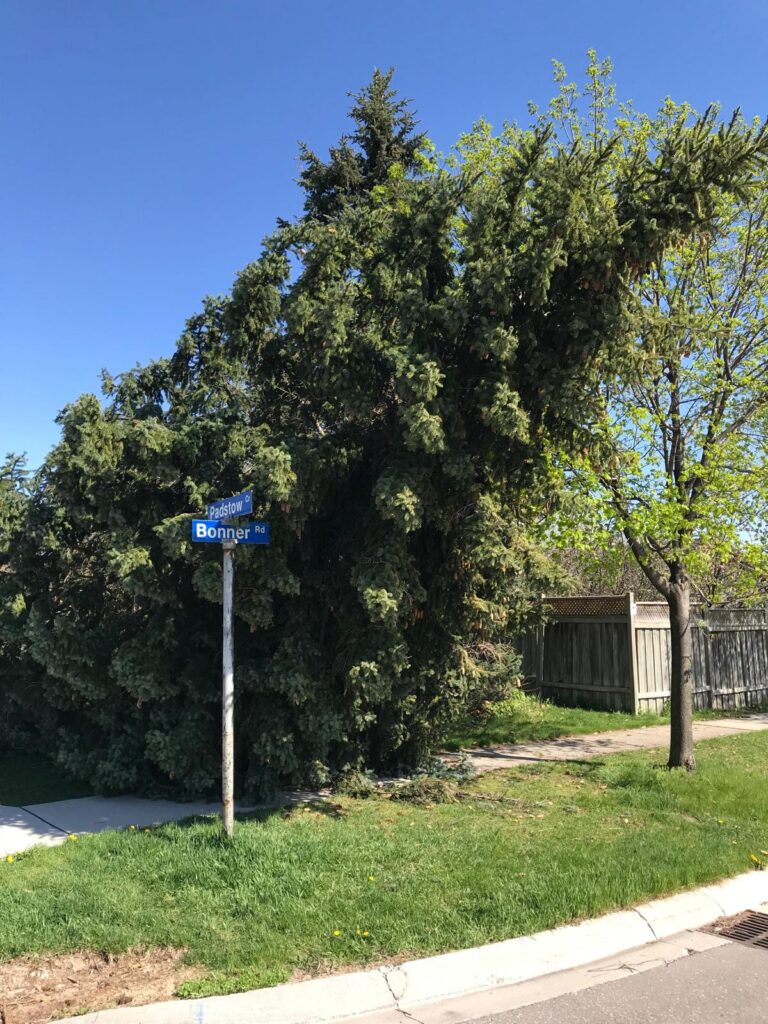
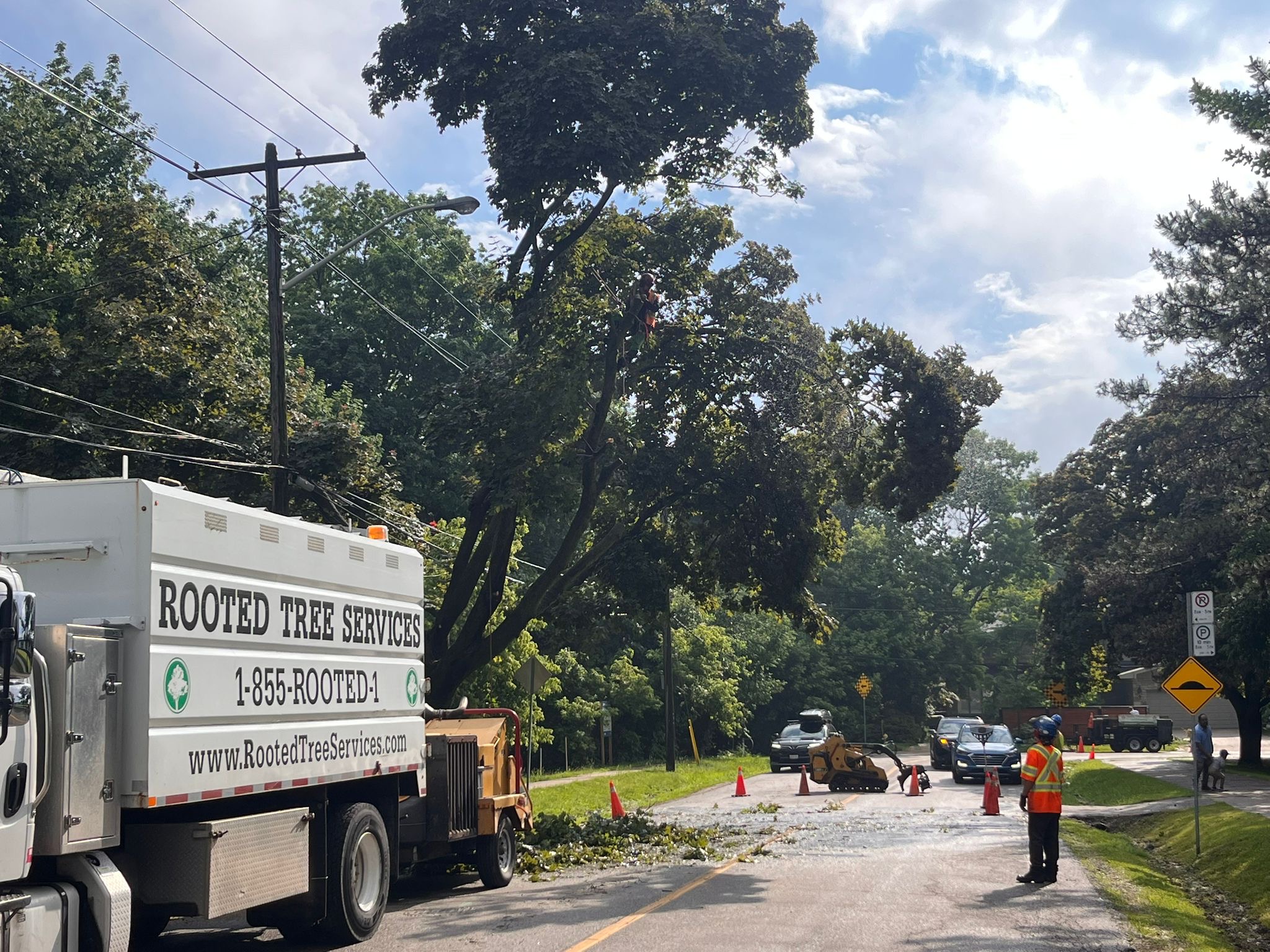
Emergency cleanup of a large tree leaning over a roadway in Clarkson, Mississauga, to restore safe public access.
What makes it urgent
Trees leaning or partially uprooted
Large limbs hanging or suspended
Sections resting on homes, vehicles, or fences
Visible cracks in the trunk or major limbs
Ongoing movement, especially in wind
Any contact with power lines
These are not stable failures. Movement can happen during or after cutting if not handled properly.
What we do on-site
The first step is control – not removal.
Identify where the tree is loaded and what could move
Secure or reduce immediate hazards
Plan removal so weight isn’t transferred into structures
Cut in sections, managing tension as we go
Work from the outside in to stabilize before removing larger pieces
The goal is to eliminate risk without creating new damage
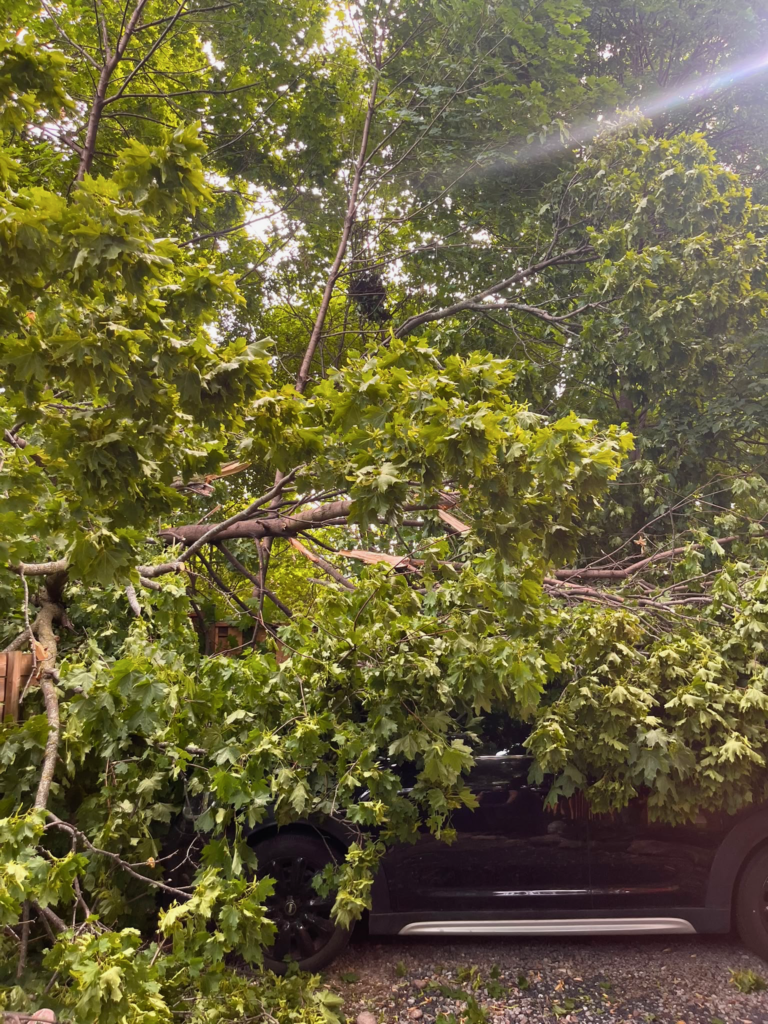
Storm-damaged tree fallen onto a vehicle in Toronto's Wychwood Park neighbourhood, requiring emergency tree removal.
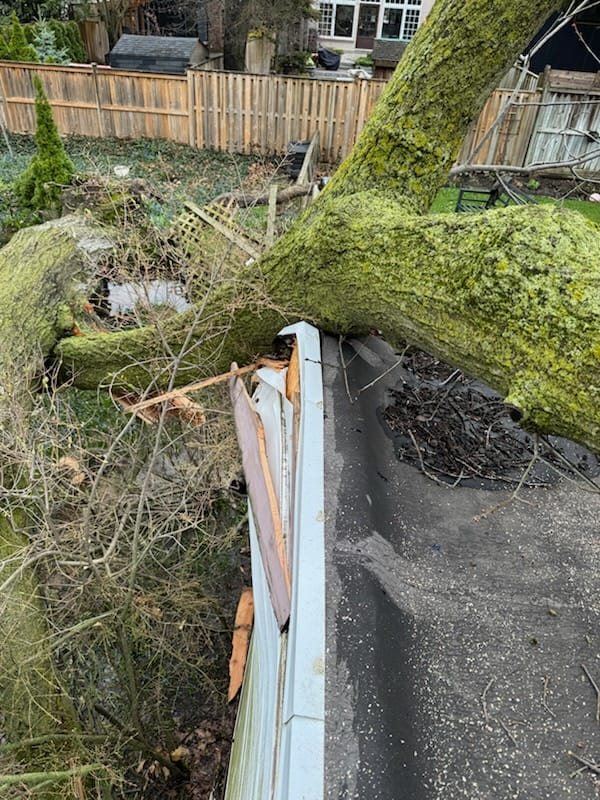
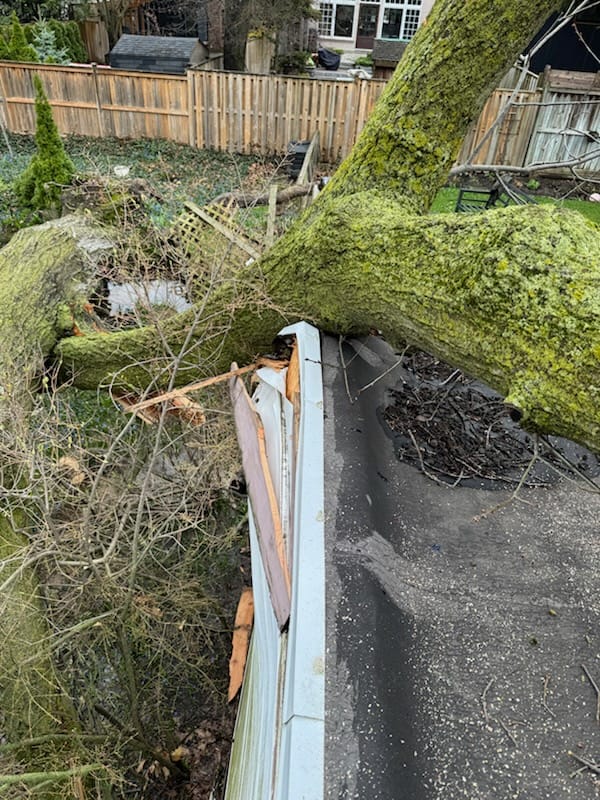
A massive, uprooted Norway Maple tree trunk covered in green lichen resting heavily on the crushed edge of a flat residential roof in Rosedale, Toronto.
Toronto-specific factors
Storm damage in Toronto often involves large mature trees – maple and oak especially – combined with saturated soil or freeze – thaw cycles.
In dense neighborhoods, trees are close to homes, so failures rarely land clean – they land on something.
What to do immediately
Stay clear of the tree and surrounding area
Keep others away, including kids and pets
Do not stand under hanging branches
Watch for power lines
Avoid cutting or moving anything yourself
Take photos if it’s safe
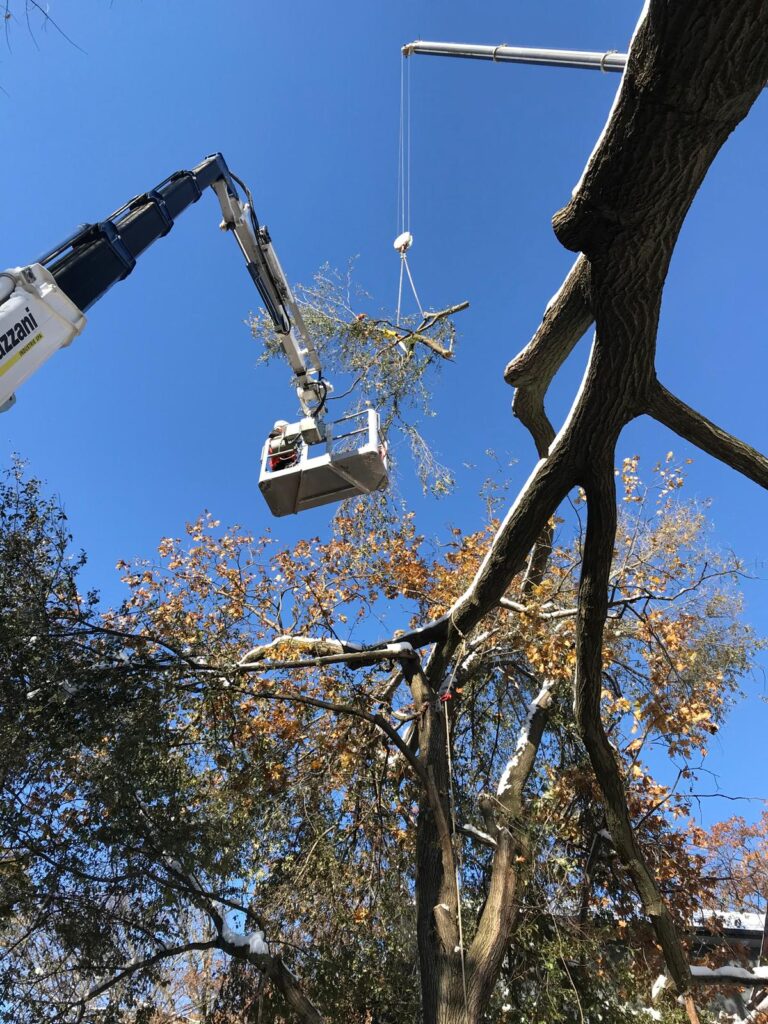
dual-crane operation in Beaches, Toronto, executing the safe removal of a massive 200-year-old Red Oak. The extensive damage to three neighboring properties.
When to call
Call immediately if:
A tree is leaning, split, or partially down
Limbs are hanging or suspended
The tree is touching a structure
You see cracking or movement
You’re unsure what’s stable
Storm-damaged trees are unpredictable. Controlled removal is required to make the area safe.
Tree Problems We Solve
Precision arboriculture for high-risk and emergency structural threats.
Every catastrophic tree failure presents a unique set of structural tensions and property risks. Explore the specific hazard scenarios below to see exactly how we map, secure, and safely extract heavy timber without causing secondary damages to your property.